


 December 9, 2025
 Nautical news
If you are new to boating, you have probably spent more time dreaming about crystal-clear bays than thinking about how to anchor a boat properly for the night. Yet the difference between a relaxed evening under the stars and a sleepless night with the engine running often comes down to how well your anchor is set.
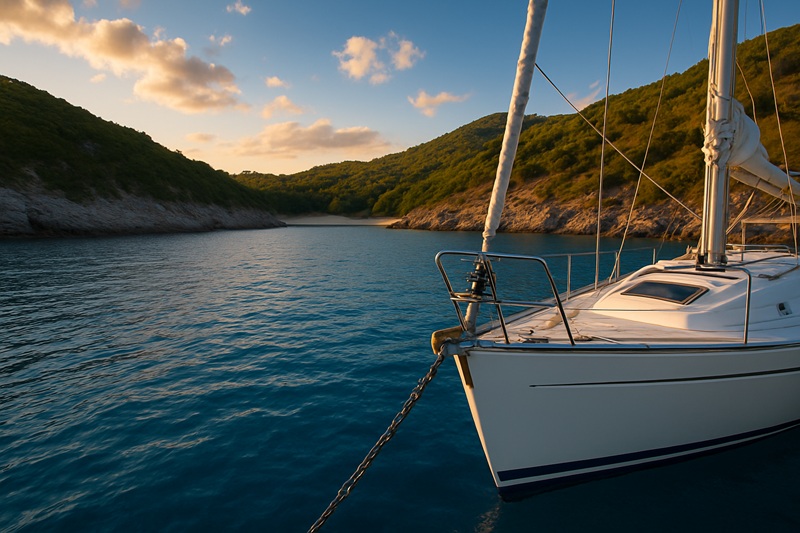
Why Anchoring Really Matters
Most days, you can drop the anchor, let out some rode, and everything seems fine – until the weather shifts, the wind builds, or the seabed is not what you expected. A change in wind direction, a grassy bottom instead of mud, a too‑light anchor, or simply not enough chain can all make your boat wander far from where you planned to stay. Poorly set anchors are one of the most common causes of nighttime incidents, from harmless “we drifted all night” stories to actual bumps with neighbouring boats. Repair bills, tow services, and marina callouts quickly add up, turning a simple mistake into an expensive lesson.
Choosing the Right Ground Tackle
Your anchor is your best friend at night, but only if it matches your boat and conditions. Flat, folding Danforth anchors work very well in sand and mud, yet struggle badly in grass and on rock. Plough‑style CQR anchors have been trusted for decades because they hold acceptably on most seabeds, which is why many charter and cruising boats still use them. Modern Bruce/Delta and Rocna‑type anchors set quickly and grip particularly well; Delta and similar designs are popular for fast setting in mixed bottoms, while Rocna‑style anchors excel where there is weed or small stones. As a practical rule, a 10‑metre (33‑foot) boat should carry roughly a 12–15 kg (26–33 lb) anchor – going a little heavier improves safety when the breeze picks up at 2 a.m.
Chain, Rope, or a Combination?
The rode – the line connecting boat and anchor – matters as much as the anchor itself. All‑chain rodes offer the best holding because their weight helps keep the pull on the anchor as horizontal as possible; for larger cruising yachts (around 12 m / 40 ft and up), a full‑length chain setup is usually recommended. On smaller boats, a common and very effective compromise is 3–5 metres (10–15 ft) of chain attached to the anchor, followed by 30–50 metres (100–165 ft) of strong, braided nylon rope. Pure rope is generally suited only to short daytime stops in settled weather. For secure overnight anchoring, a typical scope – the ratio of rode length to water depth – is 5:1 to 7:1; in 10 metres of water, you will normally want 50–70 metres of rode out, and even more in strong winds.
Picking a Good Spot
Anchoring is not like parking a car; you cannot just stop wherever there is an empty patch of water. Aim for depths of roughly 5–15 metres (16–50 ft), which give good holding without requiring excessive rode length. Check your chartplotter or pilot guide for bottom type: mud and sand (“M” or “S”) are ideal, grass (“G” or seagrass) is workable but tricky, and rock or slabby stone should make you think twice. Always look at wind and current to see how the boat will lie, and imagine your yacht swinging in a full circle around the anchor – you need at least five boat lengths of clear room in every direction to avoid getting too close to others.
The Approach and Communication
Rushed approaches are a classic source of problems: boats charge into busy anchorages, stop late, and drop the anchor while still moving too fast. Instead, slow down at least a hundred metres (300 ft) before your chosen spot and turn the bow into the wind so the boat almost stops over the place where you want the anchor to land. Clear, calm communication between helm and bow crew is essential; agree simple hand signals before entering a crowded bay so you are not shouting over the wind and music from nearby boats.
Lowering and Setting the Anchor
Despite what films show, anchors should not be thrown overboard. Lower the anchor in a controlled way until the rode slackens, which tells you it has reached the bottom. Note your GPS position when the anchor touches down so you can later see if you are drifting. As you gently reverse, pay out rode steadily, aiming for the proper scope based on depth and conditions. Once you have enough rode out, secure it to a strong deck cleat and let the boat come up gently on the line; do not rely on the windlass alone to hold the full load.
The Crucial Holding Test
Many dragging incidents happen because crews skip a simple test after setting the anchor. With the rode secured, slowly increase reverse throttle while watching the chain or rope. If it jerks, bounces, or snatches, the anchor is ploughing along the bottom and has not properly dug in. If the rode comes tight and remains steady, increase revs to around a firm cruising reverse for 30–60 seconds while checking the GPS or a visual transit on shore. If you are not moving more than a few metres, the anchor is well set; if you see movement or feel shuddering, reset and try again rather than hoping for the best.
Securing for the Night
Once you trust the set, finish securing the system for a quiet night. Use a snubber line or short rope from the chain to a bow cleat to take the strain off the windlass and reduce noise and shock loads; cruising guides and marinas in Croatia and elsewhere strongly recommend this practice. Check that the rode runs cleanly through fairleads and rollers without chafing on stanchions or rail fittings as the boat swings. If your plotter or instrument system supports an anchor alarm, set a sensible radius around your position so you will be alerted if the boat moves outside its expected swing circle.
When Conditions Turn Rough
Strong winds are where good anchoring technique really pays off. Once the breeze rises above about 15 knots, increase your scope to at least 7:1 or even 8:1 so the pull on the anchor remains low and horizontal. In narrow coves or very exposed anchorages, many skippers use two anchors in a “V” pattern off the bow to reduce swinging and share the load. In deep water – 20 metres and more – you will need significantly more rode (often 120 metres or more) and extra time for the anchor to dig in, so mixed chain‑and‑rope rodes become more practical than extremely long all‑chain setups.
Dealing with Weed and Deep Water
In the Adriatic and similar areas, large patches of seagrass (Posidonia) are common. Aside from being protected in many locations, dense weed makes it harder for anchors to bite, so expect to need several attempts, seeking sandy or muddy “holes” between the grass whenever possible. After 15–30 minutes, re‑check that you are still holding, because weed can wrap around the anchor and reduce its grip. In deeper anchorages, motions are slower but loads are higher, so patience is crucial; give the anchor time to work itself into the seabed before relying on it for an overnight stay.
Night Anchoring Practices
Spending the night at anchor is one of the great pleasures of boating, provided you prepare properly. Before turning in, walk forward and inspect the whole setup, check the cleats, snubber, and windlass, and switch on your all‑round anchor light so other vessels can see you. Pick two or three fixed landmarks ashore – such as a church tower, a bright house, and a large tree – and memorise their relative alignment so a quick look in the dark will tell you if you have moved. Always review the weather forecast, paying attention to any expected wind shifts that may expose your bay or send swell directly into it.
Staying Alert Through the Night
If an alarm goes off, whether from your GPS or your instincts, do not ignore it. Get up, check the landmarks and plotter, and make sure both your boat and those around you are still lying naturally to their anchors. If other boats are sliding around or have obviously dragged, be ready to start your engine, relieve some load on the rode, or even re‑anchor. It is far better to respond early to a developing situation than to wait until you are too close to shore or another yacht.
Morning: Weighing Anchor
Lifting the anchor is more than pressing a button. Start the engine before touching the windlass, then slowly motor towards the anchor while taking in the rode so that the windlass is pulling mainly vertically rather than dragging the boat forward. This reduces strain on the gear and makes it easier to break the anchor free. The last few metres can be the hardest because the anchor is well buried; once it comes up, rinse off mud, weed, and debris before securing it firmly in its bow roller or on deck so it cannot come loose while underway.
Common Anchoring Mistakes
Some errors appear in every busy anchorage. Using too little scope – for example, only 30 metres of rode in 10 metres of water – leaves the anchor vulnerable to any increase in wind or waves and causes many nighttime draggings. Rushing the process, driving hard astern before the anchor has a chance to turn and dig in, often just rips it across the bottom rather than letting it set. Overconfidence is another trap: even very experienced sailors occasionally drag when they skip the proper engine‑in‑reverse test after setting the hook.
Regional Factors in the Adriatic
The Adriatic Sea has its own particular winds and seabeds that visiting skippers quickly learn to respect. The Bora (bura) blows off the land in strong, sudden gusts from the northeast, so you want to choose bays that are sheltered from that direction and use generous scope if it is in the forecast. The Maestral is a more regular summer sea breeze that usually eases in the evening but still deserves attention. Much of the seabed is mud or sand with excellent holding, but around islands you frequently find rocky plates and extensive Posidonia meadows, where careful spot‑selection and respect for environmental rules are essential.
Crowded Anchorages and Etiquette
In peak season, popular bays in Croatia and other Mediterranean cruising grounds can resemble a shopping‑mall parking lot on a Saturday afternoon. Less space means less room for error, and your swing circle may overlap others if you are not careful. A good practice is to keep at least five times your boat’s length clear in every direction from your anchor, factoring in that all vessels will swing when the wind shifts. Arriving earlier in the day improves your chances of finding a safe, uncrowded spot; when in doubt, moving on to a quieter bay or picking up a regulated mooring buoy is often the wisest option.
Legal and Environmental Rules
Anchoring is also subject to national and local regulations. In Croatia and several other Mediterranean countries, anchoring in protected areas and in Posidonia seagrass meadows is restricted or outright banned, and fines can be substantial. You may also need to respect minimum distances from the shore, pay anchoring or tourist fees in designated fields, and avoid dropping anchor in traffic separation schemes, harbour approaches, or swimming zones. Checking updated charts, harbour notices, and official guidance before dropping the hook helps protect both your wallet and the marine environment.
Useful Extras for Easier Anchoring
A few add‑ons can make life at anchor noticeably more comfortable. A kellet – a weight clipped mid‑rode – helps keep the chain lying flatter on the seabed and can improve holding in gusty conditions. Anchor‑alarm functions on modern plotters and smartphone apps provide a helpful extra layer of security at night. Good bow rollers and fairleads protect your deck hardware, and carrying a second anchor gives you more options in storms or tight anchorages where you want to limit swinging.
When Things Go Wrong
Even with good technique, problems sometimes arise. If the anchor will not hold, stay calm, retrieve it, and either let out more rode, switch to a spot with better holding ground, or set a second anchor in a “V” for extra security. If nothing works and conditions are deteriorating, heading to a marina or picking up a secure mooring is the safest choice. When an anchor becomes stuck, try changing the direction of pull by carefully manoeuvring the boat; in some cases, approaching directly above it with a dinghy and lifting vertically helps. If you must temporarily abandon it, mark the location with a float and come back later with diving assistance rather than risking damage to your boat or gear.
Care and Maintenance
Regular inspection of your anchoring gear is unglamorous but vital. Check the anchor itself for cracks, bent flukes, and severe corrosion, and examine the chain for worn or thinned links, particularly near the anchor end where loads are highest. Replace nylon rope every few years or at the first sign of chafe, stiffness, or damage, and make sure shackles and connectors are correctly sized and seized. Test the windlass under load before each season, ensuring that electrical connections and gears are in good condition so it performs reliably when you need it most.
Enjoying Safe Nights at Anchor
Anchoring well is more than a checklist; over time it becomes a feel for your boat, the sea, and the wind. Each successful night at anchor builds experience and confidence, especially when combined with a healthy respect for your own limits and the forecast. For charter companies and cruising sailors alike, watching a yacht sitting calmly on a well‑set hook while the crew relaxes on deck is a quiet confirmation that the preparation was worth it. Beautiful bays, warm summer nights, and star‑filled skies are what boating dreams are made of – and with the right knowledge, practice, and respect for the sea, you can enjoy them with peace of mind.
How to Anchor a Boat – Frequently Asked Questions
Q: How much rode do I need?
A: Use a scope of about 5:1 to 6:1 for normal overnight conditions, meaning 50–60 metres of rode in 10 metres of water; increase to 7:1 or 8:1 in strong wind or waves.
Q: How do I know the anchor is set?
A: After paying out enough rode, reverse gently while watching the rode; if it comes tight smoothly and the boat does not move on GPS or relative to shore, then hold a stronger reverse for 30–60 seconds to confirm it is firmly dug in.
Q: What anchor works best in the Adriatic?
A: For the mixed sand, mud, and occasional weed common in the Adriatic, plough‑type anchors (CQR, Delta) and modern scoop‑style designs like Rocna give reliable results when correctly sized and used with sufficient scope.
Q: Chain or rope – which is better?
A: All‑chain rodes provide the best holding and are preferred on larger cruising boats, while smaller craft often benefit from a combination of several metres of chain plus nylon rope; pure rope is best reserved for short stops in settled weather.
Q: What if the anchor will not hold?
A: Retrieve it calmly, move to better holding ground or deeper sand/mud, increase scope, and consider setting a second anchor in a “V” if conditions are severe or space is limited; if you still cannot get a safe set, choose a marina or mooring.
Q: How do I anchor in strong winds like Bura?
A: Use a protected bay aligned against the wind direction, greatly increase scope (7:1–8:1), consider two anchors, and monitor your position continuously with GPS and visual references.
Q: Is it safe to sleep at anchor?
A: Yes, provided you choose a suitable spot, use adequate scope, test the anchor under power, set an anchor alarm, display an anchor light, and check the weather for the entire night.
Q: How far from other boats should I anchor?
A: Aim to keep at least five times your boat’s length clear in all directions from your own anchor position so that when everyone swings, hulls and rodes do not come into conflict.
Q: How do I free a stuck anchor?
A: Change the direction of pull by manoeuvring the boat or using a dinghy from directly above the anchor; if necessary, mark the spot with a float and return with professional help rather than risking damage or injury.
Q: Do I really need a windlass?
A: Smaller boats in shallow water can raise anchors by hand, but a windlass greatly reduces strain and makes frequent or deep‑water anchoring far easier; even with a windlass, always transfer the final load to a cleat via a snubber line.
Q: What if another boat drifts too close?
A: Communicate early and calmly, prepare fenders, and be ready to start your engine and, if necessary, raise your anchor to move away; safety and seamanship take priority over who was there first.
Q: Can I anchor anywhere in the Adriatic?
A: No; some zones are protected, seagrass meadows are off‑limits or restricted, and there are rules on distances from shore, bathing areas, and harbour approaches, so always check local regulations and charts before dropping the hook.
