


 December 2, 2025
 Nautical news
Among sailors, the pros and cons of cooking on a boat spark debates just as lively as the ones about the best routes or the island with the finest seafood. At Adria Yachts, we’ve spent years listening to skippers, family crews, beginners and seasoned captains. They all agree on one thing: cooking on a yacht is never just “making food”. It is part of the experience, the rhythm of the day, a moment that brings people together, and one of the most intimate ways to truly feel the sea.
But, as with everything in boating, there are both perks and challenges. Below is a practical, realistic guide to help you prepare better and enjoy a smoother, tastier and more organised trip.
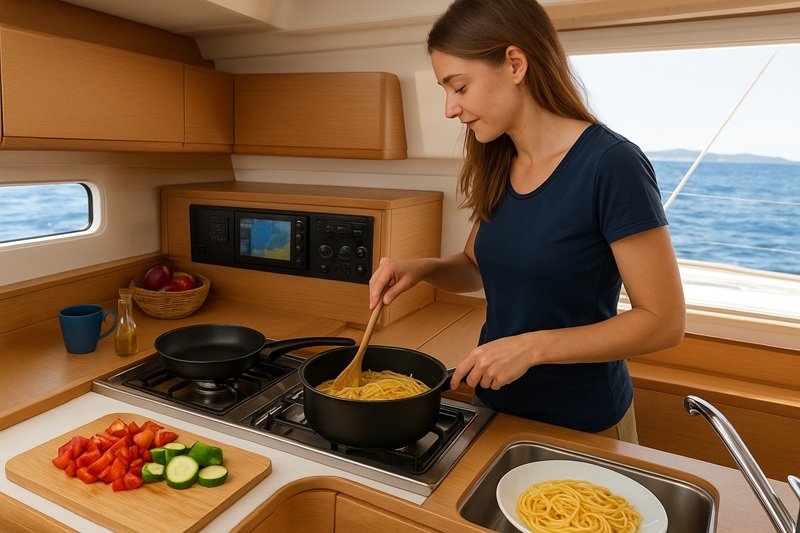
Why Cooking on a Yacht Is a Unique Experience
If it’s your first time cooking on a boat, you’ll quickly notice that your everyday kitchen habits shift. On land, you grab a big pot, spread ingredients across the counter, swing open the fridge without thinking. On a yacht, space becomes a luxury, and good organisation is priceless.
Maybe that’s why so many sailors say every meal at sea tastes “different”. It’s not just the salt in the air. It’s the feeling of creating food in a compact, functional space surrounded by waves, the scent of pine trees, harbour aromas and freedom.
Still, before the romance of galley life sweeps you away, it’s worth looking at the realistic challenges. The pros and cons of cooking on a boat always travel together, and understanding both allows you to get the most out of your journey.
Pros of Cooking on a Boat
1. Freedom to Set Your Own Rhythm
The greatest advantage is freedom. You’re not tied to restaurant hours, marina crowds or long queues. You can anchor wherever you like, enjoy breakfast in a quiet bay or dinner under the stars.
Many of our clients say this is one of the main reasons they love charter holidays — food becomes part of the adventure, not an obligation.
2. Significantly Lower Costs
Restaurants along the Adriatic coastline can be pricey, especially in peak season. Cooking onboard helps control your budget. With good planning, a crew can realistically cut food expenses in half.
That doesn’t mean skipping local specialties — it simply means you don’t have to eat out every day.
3. Fresh and Healthy Meals
Meals on a yacht tend to be simple, fresh and healthier. A fish you caught yourself, vegetables from a local market, or olive oil from a nearby island producer… Hard to beat that.
Cooking on board naturally leans toward lighter meals, which suits most sailors during summer.
4. Unmatched Atmosphere
There is something magical about preparing lunch while gently rocking at anchor. Kids chatting at the cockpit table, friends laughing over a glass of wine, the sea shimmering below — these are the moments you carry home.
No restaurant can recreate that.
5. Team Spirit
Everything works better onboard when everyone joins in. Cooking becomes a shared ritual:
- someone chops vegetables
- someone sets the table
- someone washes the dishes
- someone opens the wine
Crews bond through these small routines, even if they don’t talk about it much.
Cons of Cooking on a Boat
Of course, the pros and cons of cooking on a boat are two sides of the same coin. Here are the main challenges to keep in mind.
1. Limited Space
A yacht galley simply cannot compare to a home kitchen. Counter space is minimal, pots are smaller, and everything is compact.
If you’re used to broad gestures and large worktops, this may take some adjustment.
2. Small Fridge and Storage
Boat fridges are not household fridges. Even modern ones have limited space and lose cold quickly if opened often.
This means planning wisely, buying moderately and avoiding unnecessary stockpiling.
3. Weather-Dependent
If waves splash the deck and the yacht rocks heavily, cooking becomes difficult — sometimes impossible.
Even the most experienced cooks occasionally surrender and switch to sandwiches until conditions calm.
4. Limited Resources: Water, Gas and Electricity
Life at sea operates under different rules:
- water is precious
- gas runs out faster than you expect
- batteries need attention
- generators aren’t always an option
Without discipline and planning, cooking can turn stressful.
5. Cleaning Up Isn’t as Easy
Cleaning after cooking is more demanding onboard. There’s limited room, limited water, constant movement, and everything must be safely stored before sailing again.
If you’re used to leaving dishes for “later”, you’ll quickly learn that this doesn’t work on a yacht.
How to Maximise the Advantages and Minimise the Downsides
After years at sea and countless conversations with sailors, here are our most practical tips:
1. Keep Recipes Simple
Forget complicated dishes. The Adriatic is no place for six-pot meals or fancy reductions.
Mediterranean essentials always win:
- pasta with vegetables
- grilled or pan-fried fish
- fresh salads
- sautéed vegetables
- risotto
Quick, healthy, delicious.
2. Buy Fresh and Local
Markets in Zadar, Šibenik, Split and across the islands offer ingredients that are fresher and often cheaper than supermarket options — and you support local producers.
3. Organisation Is Everything
Make a list before departure. It sounds basic, but it saves time, money and nerves.
4. Good Equipment Makes a Big Difference
A few well-chosen items can transform the whole experience:
- small pots
- high-quality non-stick pan
- foldable cutting board
- sealable containers
These small details save the day later.
5. Cook When the Sea Is Calm
There is no better advice.
If you see bad weather approaching — cook in advance.
Conclusion: Is Cooking on a Boat Worth It?
If you ask us at Adria Yachts — absolutely yes.
When you weigh the pros and cons of cooking on a boat, the benefits clearly bring more emotional and experiential value.
Sure, cooking onboard has limitations, but these very limits make it exciting, intimate and memorable. It’s a ritual that turns an ordinary meal into a story you’ll remember.
And ultimately — isn’t that why we sail?
FAQ: Pros and Cons of Cooking on a Boat
Q: Is cooking onboard complicated or does it require a lot of equipment?
A: Not necessarily. A basic yacht with a two-burner stove, a pot, a pan and some essential utensils is often enough. What matters most is organising your space and ingredients well.
Q: How do I maintain food and dish hygiene on a boat?
A: Use minimal fresh water for rinsing. First rinse dishes with seawater to remove larger residues, then give a quick final rinse with drinking water. Use biodegradable soaps.
Q: What if we’re sailing for several days without a chance to restock?
A: Plan ahead. Bring canned goods, dry foods, long-lasting fruit/vegetables and snacks. Cook efficiently and avoid waste.
Q: Is it safe to cook in rough weather or waves?
A: It’s generally best to avoid cooking in such conditions. In well-designed galleys with secure fixtures it can be done, but you must stay cautious, ensure stable footing and have fire-safety gear ready.
